How Veterinary Manufacturers in India Are Using Technology to Transform Animal Healthcare
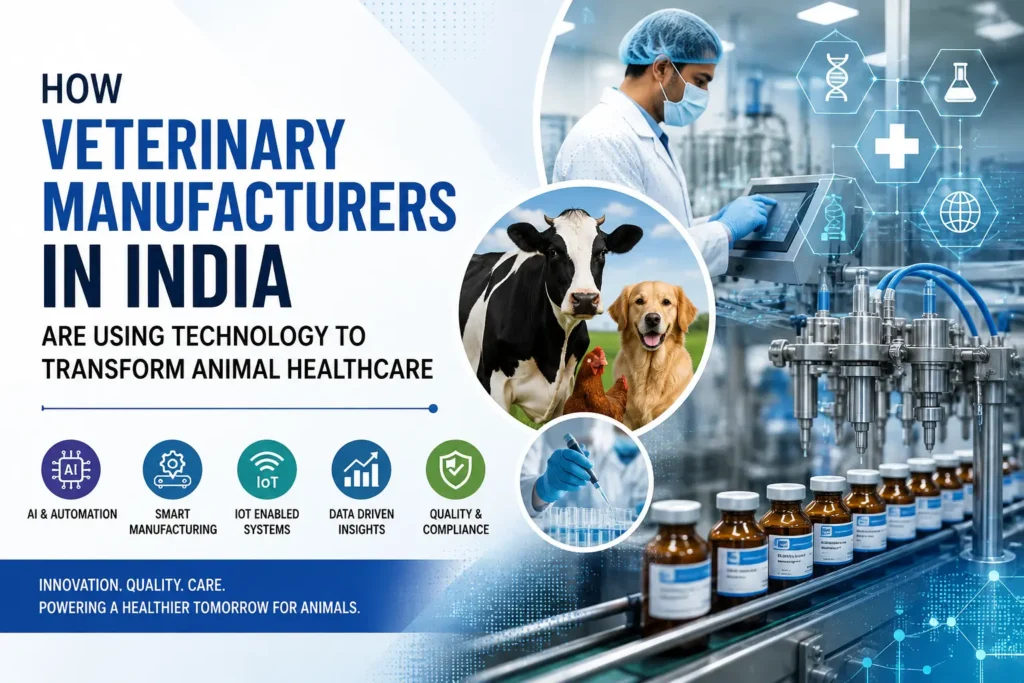
The veterinary healthcare industry has quietly become one of the fastest-evolving sectors in India’s manufacturing ecosystem. While conversations around healthcare innovation often focus on human medicine, veterinary manufacturers in India are embracing advanced technologies that are reshaping how animal healthcare products are developed, manufactured, tested, and distributed.
From AI-assisted quality control to automated production lines and digital supply chain management, technology is helping veterinary pharmaceutical companies improve efficiency, maintain global quality standards, and deliver better products for livestock, poultry, aquaculture, and companion animals.
The Digital Transformation of Veterinary Manufacturing
The demand for high-quality veterinary medicines has increased significantly due to the rapid growth of dairy farming, poultry production, commercial livestock, and pet ownership.
To meet this demand, manufacturers are investing in Industry 4.0 technologies that improve production while ensuring consistency and compliance.
Some of the major technologies being adopted include:
- Automated production and packaging systems
- Enterprise Resource Planning (ERP) software
- Laboratory Information Management Systems (LIMS)
- AI-powered quality inspection
- IoT-enabled manufacturing equipment
- Digital inventory management
- Cloud-based documentation
- Barcode and QR-code product traceability
These technologies reduce production errors, improve operational efficiency, and enhance product safety.
Smart Manufacturing Improves Product Quality
Quality control is one of the most critical aspects of veterinary medicine production.
Modern veterinary manufacturers use automated inspection systems and digital monitoring tools throughout the manufacturing process. Sensors continuously monitor environmental conditions such as temperature, humidity, and pressure inside production facilities.
Instead of relying solely on manual inspections, manufacturers can identify deviations in real time, helping reduce waste and maintain consistent product quality.
AI Is Changing Quality Assurance
Artificial intelligence is becoming increasingly valuable in pharmaceutical manufacturing.
Machine learning algorithms can analyze production data to identify patterns that humans might miss. AI can help manufacturers:
- Detect manufacturing defects early
- Predict equipment maintenance needs
- Optimize production schedules
- Improve batch consistency
- Reduce product recalls
Although AI does not replace regulatory testing, it enhances decision-making by providing faster insights from large volumes of manufacturing data.
Supply Chain Visibility Through Digital Systems
One of the biggest challenges in pharmaceutical manufacturing is maintaining visibility across the supply chain.
Modern veterinary manufacturers are implementing cloud-based ERP systems that connect procurement, manufacturing, warehousing, logistics, and sales on a single platform.
This allows businesses to:
- Track raw materials
- Monitor inventory in real time
- Forecast demand accurately
- Reduce stock shortages
- Improve delivery timelines
For distributors and veterinary brands, these systems create greater transparency and more reliable product availability.
Automation Helps Meet Global Standards
Many veterinary medicine manufacturers in India supply products to international markets, making compliance with stringent quality standards essential.
Automated documentation systems simplify regulatory processes by recording production data electronically. Digital records improve traceability and reduce paperwork while making audits more efficient.
Automation also helps maintain consistency across production batches, which is particularly important for export-oriented manufacturing.
Data Analytics Drives Better Decision-Making
Manufacturers today generate enormous amounts of operational data.
Using business intelligence dashboards and analytics platforms, companies can monitor:
- Production efficiency
- Equipment utilization
- Product rejection rates
- Inventory turnover
- Customer demand trends
- Distribution performance
These insights enable management teams to make informed decisions that improve productivity and reduce operational costs.
Sustainability Through Smart Manufacturing
Technology is also helping manufacturers become more environmentally responsible.
Many facilities are adopting:
- Energy-efficient machinery
- Water recycling systems
- Automated waste management
- Digital documentation to reduce paper usage
- Optimized production planning to minimize material waste
These initiatives not only lower operational costs but also contribute to more sustainable manufacturing practices.
Why India Is Becoming a Global Manufacturing Hub
India has emerged as a preferred destination for veterinary pharmaceutical manufacturing because it combines technical expertise, skilled workforce, competitive production costs, and expanding infrastructure.
The adoption of modern manufacturing technologies further strengthens India’s position in the global animal healthcare market. Businesses seeking private-label manufacturing or contract production increasingly look toward Indian manufacturers for scalable and technology-driven solutions.
The Road Ahead
The future of veterinary manufacturing will likely be shaped by emerging technologies such as predictive analytics, AI-assisted research, digital twins, blockchain-enabled traceability, and connected manufacturing systems.
As these innovations become more accessible, veterinary manufacturers in India will continue improving product quality, operational efficiency, and global competitiveness.
For businesses operating in animal healthcare, technology is no longer just a competitive advantage—it has become a fundamental requirement for delivering safe, reliable, and scalable veterinary solutions.
Final Thoughts
The convergence of technology and pharmaceutical manufacturing is redefining the veterinary industry. Through automation, artificial intelligence, cloud platforms, and data-driven decision-making, veterinary manufacturers in India are creating smarter production systems that benefit businesses, veterinarians, farmers, and ultimately animal health.
As digital transformation accelerates across the pharmaceutical sector, India’s veterinary manufacturing industry is well-positioned to play an increasingly important role in supplying high-quality animal healthcare products to both domestic and international markets.

Ranjan Kumar
https://roydigitalworld.comI'm Ranjan Kumar, founder of Roy Digital World. I've spent several years working hands-on with web hosting, domains, and digital marketing tools. Every coupon code on this page is personally tested before it's published.
 WhatsApp
 Consultation